by Astrocreativa.com
Former geneticist, experimental astrologer and founder of the Experimental Astrology Academy
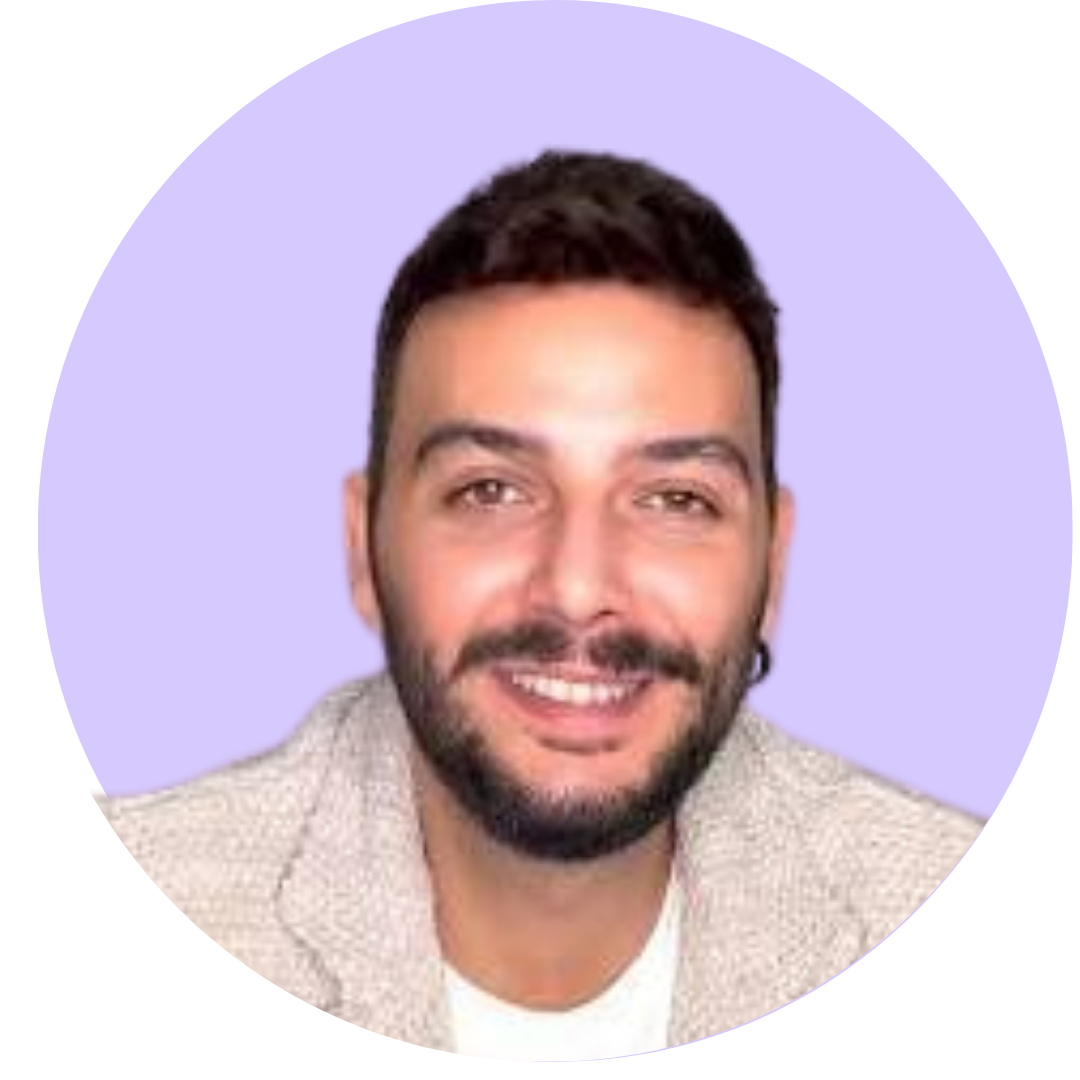
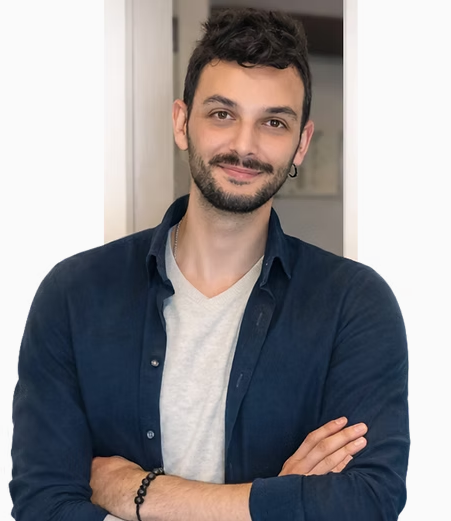
Kenan Yasin Bölükbaşı is an astrologer, teacher and researcher, born and raised in Istanbul. He studied molecular biology and genetics and describes himself as a former geneticist. He has been a full-time professional astrologer since 2013 and has specialized in several areas, among them medical astrology.
He is the founder of the Experimental Astrology Academy and a faculty member at Kepler College. Through his academy he trains students, builds research teams and collects astrological statistics. On his YouTube channel, mostly in Turkish with some videos in English, he shares his research with an international community.
Kenan is currently studying for a master’s degree in educational management. His goal is to become an academic in the field and to help build a stronger educational system for astrology, both in Turkey and internationally.
I turn astrology into story and astrologers into humans…
🟣 Are you being real or just sharing knowledge?
🟣 ARE YOU CONVEYING THE RIGHT MESSAGE?
🟣 Is your message truly felt?
What I learned from Kenan’s journey…
Have you ever studied something for years, worked hard for it, and then quietly realized it isn’t the life you want to live every day?
That moment can feel like failure.
Kenan showed me it can be the opposite.
He didn’t stop loving science. He didn’t throw away his four years of genetics. He simply listened to what his curiosity had been telling him all along: what he loved was never the laboratory itself, but the question “why.”
And he gave himself permission to follow that question somewhere new.
I think so many of us carry a version of that story.
The degree we don’t use the way we planned.
The career that looks right from the outside.
The inner voice that keeps asking for something more.
Kenan reminded me that changing paths doesn’t erase who you were. You take everything you’ve learned with you. His scientific mind is still there in every chart he reads, every student he trains and every statistic his academy collects.
What moved me most is how gently he made his decision. There was no dramatic leap and no rejection of what came before. There was honesty about where he belonged, and the patience to build it one question at a time, until astrology became not only his profession but his family.
So if there’s a question you can’t stop asking, maybe it isn’t a distraction from your path. Maybe it IS THE PATH!
Mayra Medina is the host of Backstage Astrology and a Creative Consultant for Astrologers, working across communication, branding, content, digital storytelling, and archetypal astrology. Through her podcast, Mayra aims to elevate astrology by sharing the human stories behind the people shaping it today.
In short: Kenan Yasin trained in molecular biology and genetics, chose not to practice it as a profession, and has worked as a full-time astrologer since 2013. What convinced him was not a prediction but seeing astrology taught inside a university program, where it could be studied seriously.
Kenan’s answer is his own story. As a genetics student, he kept noticing that his professors’ explanations ended with a question mark, and he wanted the meaning behind the formulas, not only the formulas. After an internship, he realized that practicing genetics every day was not the right profession for him, even though he never stopped loving science: his relationship with it was always about asking why, not working in a lab. When an astrology education program opened inside a university’s continuing education center in Turkey, he saw that astrology could be studied, researched and developed with the same seriousness.
“So in a way, what convinced me was not one astrological prediction that suddenly came true. I was seeing that astrology could be approached as something that could be studied seriously, thought [about] systematically, and researched and developed.” —Kenan Yasin
In Part 1 of this conversation, Mayra Medina and Kenan talk about the curiosity that led him from the micro world to the macro world, what he calls experimental astrology, why ancient texts need modern experience, and why working across disciplines opens doors. The conversation continues in Part 2, for Backstage members.
Kenan calls himself an experimental astrologer. He links his approach to Bernadette Brady’s reading of the Lot of Spirit: his falls in an earth sign, which she associates with people who turn mystical and occult subjects into something practical and useful. That is his mission: to help people integrate these ideas into daily life and actually experience them.
For Kenan, knowledge alone is not enough; astrology needs experience. He trains students, builds teams and does research, including a statistics club at his academy that collects data on which indicators appear most often in groups such as chefs, singers and instrumentalists. Traditional texts link Mars to the blacksmith and Jupiter to the teacher, but modern professions such as professional dog walkers or underwater golf-ball collectors appear nowhere in ancient sources. The classical texts and their translations are valuable, he says, but that knowledge must be integrated with modern experience. Experimental astrology, in his words, is not a branch but a culture.
He also cares about how astrology is taught: designing assessments, rubrics and stages of learning, because knowing astrology and being an educator are different skills.
Before Astrology
Since childhood, Kenan has been in love with the natural sciences: nature, living organisms, the habitats, fauna and flora of the systems we all live inside. He was curious about the sky too. For him, knowledge is what saves you: put someone alone on top of a mountain, he says, and the only thing that helps is knowing which plant you can eat, where the animals come from and where to find water.
The Question Marks
He studied molecular biology and genetics and loved watching experiments and observations build knowledge. But his professors’ explanations, such as the evolution of mitochondria, often ended with a question mark, because academically you can only go as far as the evidence allows. Kenan wanted the meaning behind the formulas: the philosophy of Pythagoras, not only the equations that came after him. Without noticing it, he became someone who talks about those question marks.
The Turning Point
After four years of studying genetics, an internship made his decision clear. He loved science and everything he had learned, but practicing it every day as his profession was not right for him. He had learned it because he wanted to understand why things happen. “Maybe your path is to keep asking why,” he told himself. He did not stop loving science; he moved from the micro world to the macro world.
Making Astrology a Profession
What convinced him to take astrology seriously as a career was the first astrology education program opened within a university in Turkey, through its continuing education center, with an official certificate at the end. Since 2013 he has worked as a full-time astrologer. He opened his YouTube channel simply to share information and find people excited about the same subjects. An only child, he has always had a supportive family, though no one in it was interested in astrology, so the astrology community, from Kepler College to international associations, became his family.
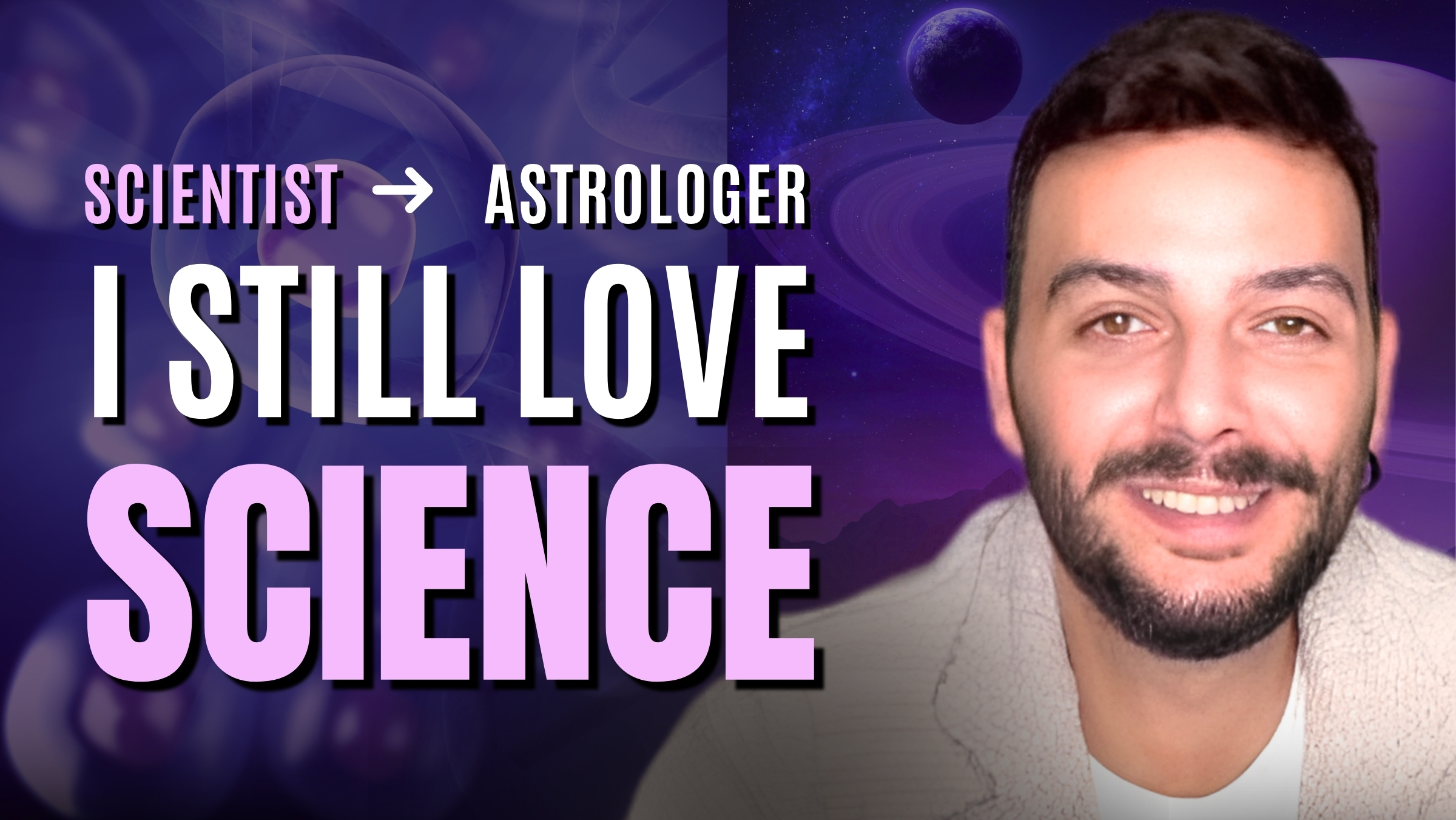
“I didn’t stop loving science at all.” —Kenan Yasin
“Maybe your path is to keep asking WHY, keep questioning.” —Kenan Yasin
“What convinced me was not one astrological prediction that suddenly came true.” —Kenan Yasin
“Knowledge alone is not enough. I need experience.” —Kenan Yasin
“Knowledge sometimes waits for its own time to appear.” —Kenan Yasin
[00:00]
And I kept asking uh why, how, and I kept trying to complete the question
[00:07]
marks that my professor sometimes had to leave unfinished. Doing that internship,
[00:15]
I saw the children and and that affected me deeply. At the beginning of a week
[00:21]
maybe 10 patient files would come in and by the end of the week by the end of a
[00:27]
month sometimes two or 3 months later those file were still active but a month later many of them had passed away.
[00:38]
I wanted to understand why things happen, how they happen and what lies behind them. So in a way I spoke to
[00:46]
myself and said can you really love this? knowledge. But maybe your path is not to build a career applying it inside
[00:56]
a lab. Uh maybe your path is to keep asking why I’m an experimental astrologer. I think
[01:04]
Turkey really is a bridge between east and west. Knowledge sometimes waits for
[01:10]
its own time to appear. I think there’s a reason why I’m here.
[01:20]
This is the story of Kenan Yasin. Kenan fell in love with science as a child. He fell in love with nature, living things,
[01:29]
the quiet systems we all live inside. He studied molecular biology and genetics.
[01:35]
But often his professor’s explanations ended with a question mark. Then after one internship, he made a quiet
[01:43]
decision. The laboratory would not be his profession.
[01:47]
He never stopped loving science. He just couldn’t stop asking why. Since 2013, he
[01:54]
has been a full-time astrologer. He teaches, he researches, and he runs his own academy called experimental
[02:02]
astrology. So, what would convince a scientist to look up from the microscope into a telescope and take astrology
[02:10]
seriously? What do you do when the science you love can explain how life works but not why it matters? Why would
[02:18]
a scientist who never stopped loving science turn to the stars? Welcome to Backstage Astrology where astrology gets real.
[02:30]
So, welcome back to another episode of backstitch astrology. My name is Mariam Medina and today I am so excited to have
[02:37]
with me Kenan Yasin. Kenan, is it Kenan or Kenan?
[02:42]
Yeah, Kenan. Kenan. It’s Kenan. Kenan, thank you so much for being here. Kenan, to talk about your story, your journey
[02:50]
as an astrologer. Tell us a little bit about you. Where are you based? What type of astrology are you doing currently and how are you these days, Kenneth?
[03:00]
Well, great question. Uh, so thank you.
[03:05]
Thank you for inviting me. But, uh, thank you. Thank you so much. And uh and maybe I I just want to say that I
[03:12]
listened to your interview with Julia, dear Julia Simas, and it was wonderful to you know one
[03:19]
thing especially caught my attention there. Many questions lead naturally to the you know next question and they are
[03:28]
really good questions but the conversation keeps uh opening itself up
[03:35]
through new questions but at the same time I feel that there was a one common
[03:41]
theme one common theme that kept coming back throughout the conversation uh from
[03:48]
Julia’s word I kept getting the feeling the trust feeling of trust
[03:56]
trusting trusting knowledge uh trusting what you know so trusting people trusting your teammates trusting
[04:05]
your questions so it’s it’s really important I think and I really love your interview style Myra
[04:14]
okay because because this these kind of programs can sometimes be a little boring uh you At least I think so. But
[04:24]
sometimes people you know looks you know look as as if they are simply introducing themselves
[04:32]
or introducing the work they do. But actually I think a lot of uh this depends on uh the moderator. So if if
[04:41]
the moderator prepares good questions, knows the guest well right understanding
[04:48]
understands that persons well and prepares questions that really uh fit that person and their story then the
[04:56]
conversation can give so much more the uh more to the listeners and the interviews or viewers I mean so so I
[05:05]
think I think you do that very well. I’m really glad. Thank you.
[05:11]
Thank you so much. No, it means a lot. I I really I’m really happy you you like this. You know that the point is really to get to know you behind the
[05:19]
astrologer. Of course, you have done extensive work around astrology in Turkey and you know now sharing it with the world and this is one of the reasons
[05:26]
why I wanted to know more about your story. Not only because you’ve done amazing research I mean on many subjects
[05:33]
related to astrology but also because in you you are based in such an interesting place which is Turkey and also because you have such an
[05:42]
interesting background. So let me tell you guys Kenan was studying molecular biology and genetics before becoming an astrologer.
[05:52]
So whoa the flesh what happened there? you know, I was just like, what? Who were you then and
[06:01]
what were you looking for back in those days when you were studying molecular biology and genetics?
[06:08]
Yeah, actually this is a very good question. I know that these kind of stories is amazing. But you know that I
[06:16]
was born and raised in a stumble in Turkey and as in our country is literally a place where east and west
[06:23]
meet. So in in many ways uh my own life uh is is a little like that too. I live
[06:33]
in a real mixture of eastern and western culture and before astrology of course I worked in very different fields but I
[06:42]
can say that I have been a fulltime professional astrologer since 2013 I
[06:50]
think I remember 2013. So I have specialized in many areas but
[06:57]
some areas are also important. Uh for example the medical astrology because I’m a former geneticist maybe I can say
[07:05]
that. So it’s it’s it’s very short version of my own journey but before astrology actually um I follow the path
[07:15]
of uh paths in genetics but but since I was a child Myra so I have always been
[07:22]
in love with the natural science and and I still I am so I really love them I
[07:30]
love observing them you know nature live or living organ organisms uh and
[07:37]
life habitats, phonas, floras. I genuinely love all of these things and I
[07:43]
I also love you know love how the or the scientific side of life maybe I can say.
[07:51]
So because there is still so much we need to learn and we are we are already
[07:58]
living inside all of these systems a lot of knowledge. So that’s my passion maybe I would say.
[08:06]
Thank you.
[08:07]
No it’s amazing you know how how you you know your perspective about the world and how you are fascinated by science.
[08:15]
Can I ask you what did you genuinely love about the science and what wasn’t it given you that you had to switch to
[08:22]
astrology if there is anything that happened.
[08:26]
Uh maybe what I what what was I looking for right? What kind of wanted to at
[08:33]
that time was actually very simple. I think uh I wanted to learn because I think knowledge knowledge is one of the
[08:42]
most important things we have. Imagine I put you on the top of the mountain and take everything away from you. Okay,
[08:51]
you’re standing there alone. What is going to save you? Actually, the only thing that can save you is knowledge. And can I eat this plant or not?
[09:04]
Or where might wild animals come from? Where can I find water?
[09:12]
You need knowledge first and then of course you need to organize that knowledge and know how to use it. So my
[09:21]
mind works like that with almost everything. I also have you know have a
[09:28]
very mercurial u charts. So I think knowing things, learning things and
[09:35]
being curious describes me very well and canon at that time you know was extremely curious and today is still extremely curious.
[09:46]
Okay. So, I’m assuming you will tell us if you want to share with us your big three, but I’m assuming you have either some really strong Mercury placements or
[09:56]
like Gemini, Virgo, even like maybe some Jupiter or something like can you share with us your your big three maybe so people can understand where all this curiosity comes from?
[10:07]
Yeah, of course. Uh my rising sign is uh Leo and
[10:13]
its lord is is sun is Virgo and also my moon sign is Gemini. So you
[10:22]
know the the pivotal point is Mercury maybe I think you know extremely striking when we think about Mercury’s
[10:32]
themes. So investigating, researching, writing. So it’s it’s really strong in my charts, right? Yes.
[10:42]
Interesting. So after like I mean not not after but while you were studying molecular biology and genetics, what
[10:49]
happened then that you know made you curious about astrology or does astrology has always been there? H how
[10:56]
did you you know happen to to get involved with astrology?
[11:02]
Yeah, that’s a great question. I always tell you know tells the the the same uh
[11:10]
quotes know from micro world to the macro world macro world maybe maybe we
[11:17]
would say this but if you ask me what I loved about science I think it was as it
[11:24]
was the possibility of seeing experiments and observations right following them and seeing how knowledge
[11:31]
is built and and that still exits me enormously. But but there was also
[11:38]
things that science could not give me give me at that time. Uh for example at
[11:46]
university we had very valuable professors and when they explained
[11:53]
something to us Myra uh my man often stayed with the question mark at the end of the explanation.
[12:02]
for example, they might explain the the evolutionary development of mitochondria uh or you know these organals. Uh but at
[12:12]
the some point at some point uh the explanation ended with a question mark and there was there was no consciation
[12:20]
and because academically you can only go as far as the available evidence allows
[12:29]
you to go. Beyond that point you have hypothesis or assumptions and perhaps
[12:36]
you cannot easily bring them together with theology or philosophy or astrological perspective within an
[12:44]
academic scientific framework. There was you know that that was where I started to feel a kind of uh you know this
[12:52]
certificate certification maybe I can say. uh but I I always felt
[13:00]
that I always felt that uh what we learn should not be preserved only in a dry language right
[13:09]
and actually we can see uh this in this history of education too in much older
[13:16]
uh periods there was rhetoric uh for example and there was a systems uh such
[13:23]
as uh trium quadrium You know what I mean? Tribium, quadriv
[13:31]
in hellenistic times, music music was there, mathematics was there, a geometry was there, a person’s education was
[13:41]
understood through all of these subjects together.
[13:45]
But today we need we often have a much more deterministic approach, right? Myra
[13:52]
someone teachs you the the the sign function, right? sign function for example and they give you a formula for
[14:00]
sign but but even the word sign has its own history and meaning. Uh it has the
[14:07]
idea of a cavity or or a hollow behind it. But normally nobody tells you that
[14:15]
and they explain that when you have a right angles uh you can calculate certain relationships but then
[14:24]
we can simply call it a 90° angles and move on and I’m interested in the
[14:32]
philosophical behind it.
[14:35]
90° the meaning there. Oh wow. Oh that’s amazing. Now why did we arrive there? Or
[14:44]
maybe what does it mean? Uh that is why I want to learn Pythagoras for example
[14:52]
Pythagoras and I want to understand his his ontological ideas uh not only use the formulas that came afterwards.
[15:02]
Pagoras around the around the 6th century BCE, right? Maybe 500 or 6th
[15:10]
century BCE uh was already working with the tetrus and the triangular
[15:19]
arrangement of the of points and later thinkers such as Tommy. Tommy Tommy worked with mathematical uh
[15:28]
proportions, music and harmony. There is whole relationship between harmony, visual
[15:36]
effects or maybe rhythm and the natural science were all understood as connected
[15:42]
with uh each other. And at university right without knowing all of these all
[15:50]
of that background sometimes I was simply given a formula I could use the formula of course but I wanted to know
[15:58]
the meeting or the meaning of the meaning of the formula the hierarchy inside its philosophy. Yes. So that was
[16:07]
the part of uh part that did not satisfy me and I started trying to feed feed the
[16:14]
the other side and I kept asking uh why how and I kept trying to complete the
[16:22]
question marks that my professor sometimes had to leave unfinished and gradually
[16:30]
without really noticing it I became someone uh who was who was talking about those question marks. Myra.
[16:39]
No, it’s brilliant, you know, to actually to actually question the formula. Like it seems like you were trying to understand why Pythagoras came
[16:48]
like the need behind that formula like where does it come from? What was he thinking or trying to figure out in
[16:54]
life? So that curiosity is pretty um relevant with you it seems.
[17:00]
And also I mean you describe it so beautifully moving from the from the micro or micro I think you say micro.
[17:06]
Yeah. turning point to the to the macro world which is you know from looking into a microscope to looking at the sky through a telescope
[17:14]
which is pretty much astrology. So so when did you make that switch because I’m assuming that you are not doing
[17:23]
genetics anymore like molecular biology or are you still doing that or not? What are you with that? I’m a former
[17:29]
geneticist former and yeah then I understand that but but you know still science was still there but I had moved
[17:39]
toward another side and started doing different but I have a turning point right yeah so maybe I will I I mentioned
[17:47]
that no there was actually a specific moment in my life and after studying
[17:54]
genetics uh for four years I went to a a a university hospital for an internship. Uhhuh.
[18:02]
And during that internship there they were they were working with children who had bone marrow cancer
[18:12]
and the medical term or the medical team was trying to understand which
[18:20]
treatments uh might work best. And part of that part of the process involved and in the laboratory we analyze uh the
[18:28]
chromosomes to support decisions bone marrow maybe we can say so u because it’s more effective for each patients so
[18:37]
but doing that internship I was also saw the the patients themselves I saw the
[18:45]
children and and that affected me deeply uh at the beginning of a week maybe And
[18:53]
patient files would come in and by the end of the week, by the end of a month, sometimes two or three months later,
[19:02]
files were still uh you know those file were still active. But a month later, many of them had passed away. So after
[19:11]
that internship, I made my decision. I said to myself, uh yes, Canon, you really love science.
[19:21]
I love everything I have learned. Uh I love understanding how these systems work but I don’t feel that practicing this as my profession is right for me.
[19:34]
And that internship was really the turning point. Maybe I’m a little sensitive emotionally. I don’t know. And
[19:41]
and I realized that working in that environments every day would be very very difficult for me. But I also
[19:49]
discovered something else there. I realized that uh I had never really learned all of this knowledge. Uh
[19:58]
because I wanted to spend my life applying it inside a laboratory, a lab.
[20:04]
I had learned it because I wanted to understand why. I wanted to understand why things happen, how they happen uh
[20:14]
and what lies behind them. So in a way I spoke to myself and said can you really love this knowledge but maybe your path
[20:22]
is not to build a career applying it inside a lab. uh maybe your path is to
[20:30]
keep asking why keep questioning as I mentioned that so and this is really how
[20:38]
I made decision I didn’t stop loving science at all but I simply understood that my my relationship with science was
[20:46]
more about questioning understanding and exploring about work not about working in laboratory right
[20:55]
wow I didn’t know this part that’s so I mean um yeah I mean it just just got me right because you go to your internship you’re full of like dreams and
[21:03]
expectations and then suddenly you also discover another part of yourself which is like yeah I love science and medicine
[21:10]
and everything but like I you know acknowledging that you can’t cope in a way with this part of like this is going
[21:17]
to be my everyday life. I mean, I’m going to see these scenarios and you know, actually honoring that part of
[21:24]
you, I think it’s it’s such a beautiful thing you did so young.
[21:30]
So, so Ken, you came from from a discipline where you find out whether you’re right or you’re wrong. Now,
[21:38]
astrology rarely gives you that certainty. What was the first thing that actually convinced you about like okay
[21:46]
I’m going to I’m going to put my attention here in astrology for a while or this is what I’m going to do. What convinced you about astrology because it nothing’s for certain really right?
[21:58]
Astrology should not replace real world expertise, right?
[22:05]
Yeah. Yeah, I know that. What actually convinced me? But but first of all, maybe actually astrology had always been somewhere in my life.
[22:15]
Uh so just just as I was interested in the natural science from childhood, I was also interested in the sky. And I
[22:24]
think there was there was always the this cur curiosity in in in me to understand the hidden realities
[22:33]
behind what we see and behind what science can explain. So my relationship
[22:40]
with astrology developed very natural very naturally through questioning. But if you ask what convinced me okay uh
[22:50]
maybe maybe to take you know given astrology seriously as a professional uh career. Uh there was something very
[22:58]
specific time at that time uh for my life. Uh for the first time in Turkey which is my home country you know that
[23:07]
an astrology education program had opened within a university.
[23:14]
Seeing astrology inside a university environment was extremely important for me. It it
[23:21]
was it was offered through the university’s contining education center. So it was not a
[23:28]
university degree program but at the end uh at the end you received an official
[23:36]
certificate signed by director of the university and at that time I thought that was wonderful
[23:45]
uh because I have a scientific approach as you know that but unfortunately the that program later closed uh there were
[23:53]
complaints uh from organizations connected with physics and astronomy and over time these kinds of you know
[24:01]
these kinds of programs became much more difficult to run in Turkey or in other countries I don’t know but at that
[24:08]
moment uh seeing astrology being taught within a university structure was probably uh the the the thing that
[24:17]
convinced me professionally I thought okay okay I can actually study this seriously there is a structured
[24:25]
educational environment for it. Uh and this is still very important to me today because anybody can know astrology and
[24:34]
many people can teach astrology but being an educator or you know or an academic is is something different
[24:43]
right? You need to understand how education itself works. You need to know how to design assessments, rubrics or
[24:52]
bloom taxonomy or maybe you know that a lot of the things we need to use and develop through different stages of
[25:01]
learning. Actually I’m studying uh for a master’s degree in educational management. Now wow, you’re full of surprises.
[25:13]
I I genuinely want to become an academic in this field and I’m learning these things because I want to develop uh a
[25:21]
stronger educational system for astrology both in Turkey and internationally.
[25:27]
uh that is one of the main uh reasons I’m doing my master’s degree because when I complete it hopefully I wish
[25:37]
yes you will always say inshallah inshallah I wish I read I I already have several projects
[25:45]
in my in mind that I would really like to develop. Uh so in a way what
[25:51]
convinced me was not one astrological prediction that suddenly came true. I was seeing that astrology
[26:01]
could be approached as something that could be studied seriously, thought systematic systematically and researched
[26:08]
and developed. That was that was probably the moment when I began to see
[26:14]
uh see it as as a real professional path for for myself.
[26:21]
So, wow. So, so I think it’s it’s just brilliant and amazing. But Genanon I know that you also have like a big YouTube channel.
[26:31]
How did that did that start? Um, you know, tell us the story about your your YouTube channel. I think it’s in Turkish, isn’t it? But you have some videos in English as well.
[26:40]
Yeah. Yeah. Yeah. I didn’t really have a big big purpose or big big, you know, big target big target before opening my
[26:49]
YouTube channel. I started it simply because I wanted to share information.
[26:55]
uh you know in the early days Myra not now nowadays early days YouTube was very different uh I don’t know if you
[27:04]
remember that period but but it it wasn’t really a place where people were talking about money promotion or
[27:12]
advertising their own work people uploaded videos just simply videos because they wanted to share their own
[27:20]
uh you know scientific area or any other areas or hobby hobbies, meet people who were really excited
[27:29]
about the same subject and exchange ideas, comments and watch each other and
[27:36]
learn from each other. That was really my motivation to still remember my first video. Myra, you do?
[27:45]
Yeah. Yeah. My first first first video.
[27:49]
It was about Hitler. Hitler and operation connected with the Baltic region, Baltic Sea and and Britain. Uh
[27:58]
what what fascinated me was the electional timing of the event. At the exact uh time I was studying, the moon
[28:08]
was at uh the third degrees Taurus and the sun was at 19° Aries. And these are
[28:16]
extremely important degrees because the sun is exalted in Aries traditionally at 19°.
[28:23]
And the moon is exalted in Taurus traditionally at 30 3°. So, so both
[28:31]
luminaries were exactly at their exaltation degrees. And when I noticed this, I became very excited because I
[28:38]
thought maybe this timing was chosen deliberately according to the sky.
[28:45]
And that that became one of my first astrological research topics and I made a YouTube video about it. And that was actually my first YouTube publication.
[28:56]
But from so from the beginning my mindset was was always very simple. I’m curious about something. I research it.
[29:05]
Okay. I became you know I become excited about it. Okay. For me it was a place where I where I could produce content.
[29:14]
But for you, did you feel comfortable doing those YouTube videos? Was there ever like, you know, some fear or a moment where you said, you know what,
[29:22]
all this YouTube thing, it’s taking much from me? No, it’s it’s your honestly.
[29:27]
Yeah, honestly, I I didn’t really have a big fear uh before doing that and now.
[29:34]
So it’s it’s a great opportunity I think because for me it was a place where I could produce and honestly it made me
[29:42]
very happy very happy because I loved and connect with people who were interested in the same things. So
[29:51]
because astrology is not a really big popular or scientific approach. We need to reach each other. We need to we need
[30:00]
to connect each other. Um because we are a big family and I need to uh you know
[30:08]
find my family’s members from my YouTube channel or any other social media accounts, right?
[30:16]
Amazing. Yeah, you need to find your tribe and you know YouTube is a great place for that. I also think so. But Kenna, now you’re you’re on YouTube,
[30:23]
right? So now maybe your family and friends, you know, watch you talking astrology. How was that for for your
[30:31]
family and friends when you told them, you know what, I’m just going to be an astrologer or how did they react?
[30:38]
That was a big shock.
[30:43]
It’s very good question and I understand that. I think people may genuinely be curious about this because uh from the
[30:50]
outside this kind of change can look like a very big decision. I know that your family supposed your education or
[30:58]
maybe you know money is spent you you go to university you study something difficult and then suddenly it may look
[31:08]
as if you are living the that profession and moving into something completely different I understand but actually and
[31:16]
I’m an only child in my family I don’t have any brothers or sisters and I have always had a very uh supportive family.
[31:26]
So I was never really criticized either financially or because of the
[31:32]
decision I made in in my life. But I don’t want to say this maybe maybe we
[31:40]
need to think about this approach because this kind of transition uh was much more difficult or much more dramatic for early earlier generations.
[31:51]
Myra writes. Mhm.
[31:52]
Actually, this question surprises me a little. Why? Because sometimes I think why do people see it uh in in much you
[32:03]
know in such a dramatic way and I don’t completely understand because I personally never experienced that kind of conflict.
[32:11]
But when I think about this even when I when I was at university our profess professors were already telling us uh
[32:20]
don’t stay uh inside only one profession work across disciplines
[32:28]
and if you study uh one subject add another field to it and try to create
[32:35]
something between two disciplines because that is where you can find more freedom.
[32:43]
And when we think about this thought, I think when we look at the the world today, there is almost no such thing
[32:52]
anymore as being the specialist, you know, of one only one single job.
[33:00]
Professions are only are not simply teacher, doctor, blacksmith or baker
[33:08]
anymore. Even a baker can work inside a catering company and create something completely different. They can build a
[33:15]
completely new bakery concept. So, so I think the people who can bring different branchs together uh and connect
[33:25]
different disciplines and integrate them will become much stronger in the future.
[33:30]
Actually I uh I think this this is becoming almost necessary. Um and we are
[33:38]
living in the 21st century. Uh and for me uh one of the most important characteristics of the 21st century is
[33:46]
exactly this integration. So uh many of people have to learn astrology or any kind of disciplines. Right.
[33:58]
So from my point of view of course. Yeah.
[34:00]
Yeah. That’s fascinating also. No, I think you’re right. Maybe the previous generations it was it was really hard
[34:07]
for them to like come out right like I just I think we interview Maria which is an Argentinian astrologer and she was
[34:16]
working on like great astrologer yeah she said she was you know also in a bi biology kind of sector and then you
[34:25]
know she became an astrologer and and she was saying I don’t know how I found the courage because at that time you know and for us you know I probably we
[34:34]
are around the same age I don’t know it’s it’s easier you know it’s more open I think the previous generation paved the way for us to you know to to make a
[34:42]
smoother transition although personally some of my family were were shocked you know a little bit like what you’re going
[34:50]
to do astrology now are you crazy yeah they they were not really shocked but many of my friends who graduated
[34:57]
with me from genetists are doing completely different things now myra Yeah, exactly. Things are changing.
[35:05]
Yeah. One of them became a tattoo artist, you know. There you go. I love it.
[35:11]
Yeah. He works with tattoo arts now. And even though they graduated from genetists and another became a real
[35:18]
estate agent and works in, you know, property sales and another one works with special
[35:28]
dietary pro products, nutrition. And one of them, one of my friends, even though uh he also studied genetist, developed
[35:36]
himself in uh in engineering, he created a special type of 3D printer and even
[35:46]
patented it. So going going into different areas can actually open completely different doors. Maybe what
[35:54]
surprises people about astrology is that they sometimes don’t see it as a real identity, right? Or a serious career
[36:03]
path because the word itself may sound unusual, strange or or too far outside the normal categories. But maybe maybe
[36:13]
that is why people react differently to it. But I think we can we can create a place for ourselves in almost any field
[36:22]
and we can also build a real professional science and space it. So personally I never really
[36:31]
received criticism about becoming an astrologer from my family or my you know environments. It’s interesting also know
[36:39]
because I think I don’t know in Turkey you will tell us but in Mexico astrology seems to be quite popular. You know we have on the TV this person that comes
[36:47]
and and says you know the sun sign forecast and you know most people know their their sun sign at least I think my
[36:55]
parents know their sun sign. Now the new generations they know moon ascendant and you know all these things but here for example where I live it it’s not that
[37:04]
popular. I mean there is I I haven’t seen a person on TV saying you know Aries Taurus and and every time I my my
[37:12]
partner mentions like I do astrology it’s kind they react like oh like so how how is it in Turkey? Is it really
[37:19]
popular? How how is astrology in in in Turkey? I think it’s really popular because when we think about our roots,
[37:27]
you know, it dates back from very very ancient times.
[37:34]
Yeah. Ancient times. So, we need to think about this actually. I think it may be more uh you know useful not to
[37:43]
separate from you know western or eastern astrology. So we have a mixed
[37:50]
mixed culture uh in in our country. So when we think about you know everybody
[37:57]
knows that their sun signs but uh more further maybe I can say that you know
[38:05]
they already know uh when Mercury retrogrades or you know that and karmic
[38:13]
astrology is also very popular in Turkey.
[38:17]
karmic karmic hermetic or you know astroology maybe we would say astroology
[38:24]
is really popular in our country because our country’s salt node as in Pisces
[38:32]
and uh Turkey is a Scorpio sign you know Scorpio sun sign so wow so and and our
[38:39]
rising sign is cancer you know cancer scorpio and pisces teams all of watery lines.
[38:48]
Oh wow. Yeah. So Ken, I know you have written also four books or so maybe more in the last years. Is it four or five?
[38:58]
I I prepared my books of the Virgo man. I’m so sorry about it. Amazing.
[39:07]
Maybe I would say that these are not just an academic booksh. Mhm.
[39:12]
Uh these are maybe maybe we we would say an experimental approach. I really want
[39:18]
to you know be an experimental astrologer. So why I wrote them in
[39:25]
Turkish? Uh that is actually a very good question. I know that. But books are not uh academic books at the
[39:34]
moment. uh because of that uh before opening them to an international
[39:42]
audience Myra uh I felt that I first uh needed to gain more experience with these ideas inside them. Why?
[39:53]
Because so when I started writing these books, my main idea was uh that they they should they should become uh
[40:02]
references and resources for the courses I teach and for for the work I I’m
[40:10]
already uh doing and in that sense they they are really uh books based on
[40:17]
experience and I have developed uh different techniques uh maybe planetary
[40:24]
formulas uh it’s called Turkish Gizan formul formulary but we call planetary formulas a system uh
[40:33]
that I explain in in um maybe in the in the universe maybe we can say uh the
[40:41]
rules of the universe uh practical ways of using the calaldian order and also
[40:48]
formulas and then I create thought my own work. I developed these uh to these
[40:56]
thought through my own research and my own practice and over time I started uh
[41:03]
seeing how they worked. So I saw the results through my clients and I saw uh
[41:10]
in saw them in practice and I also saw I received feedback from u my readers or
[41:18]
clients. So as the idea um these ideas become more established
[41:25]
uh my my my aim is eventually to place them inside a more academic framework
[41:32]
because I would like to do broader uh literature reviews connected them uh
[41:39]
with research uh from other scientific fields and that is definitely one of my goals but the books I have now are
[41:48]
mainly practical ical books based on my own experience and research and my most recent book you know the knowledge of
[41:57]
the the knowledge in place maybe uh this one uh the knowledge of place in
[42:04]
astrology is a little different it’s much more academic uh in structure and uh there I I explain my research on
[42:12]
astro mapping and historical approach to place so I may put more effort into bringing that one one to uh an
[42:22]
international audience first actually I’m already working on the English translation of that book now amazing
[42:28]
partly because it’s most academic one but the other earlier books earlier books you know you know my main purpose
[42:36]
uh propose was really we really to gain experience collect observations
[42:43]
so yes there is definitely a you know a thing that we need to think about uh
[42:50]
these are just exist only in Turkish and many many international colleagues cannot read it but for me the Turkish
[42:57]
audition or additions were also were also an important stage of development and I needed that stage
[43:07]
first myra now I feel that the next stage is beginning and little by little I want to bring
[43:15]
these ideas into English as well Yeah, it’s so interesting. You mentioned uh at the beginning of this question something
[43:22]
uh experimental astrology which is the name of your of your academy in in Turkish I think and also my own title I’m an experimental astrologer.
[43:32]
Experimental astrologer. Exactly. So but can you can you explain the audience what do you mean by it and has the meaning changed since you choose it?
[43:44]
Uh absolutely.
[43:46]
Maybe let me tell this uh knowledge or you know information
[43:53]
uh about um Bernardet Brady as you know as you know we use uh Arabic
[44:01]
lots you know part of fortune or part of spirits in our charts and especially the lot of spirits can
[44:09]
tell us something about a person’s purpose or direction in life and Bernardet Brady
[44:16]
gives a very beautiful interpretation according to the elements where the lot of spirits is placed. Mine is in an uh
[44:26]
earth sign and for the earth element she basically says that these people are
[44:34]
here to turn mystical and occult subjects into something practical and useful.
[44:44]
I almost know that sentence by heart because it describes my approach very well.
[44:50]
Correct. approach very well because that is also how I see astrology and metaphysics subjects because I want to
[44:57]
create ways to people to in integrate these ideas into their daily life and
[45:04]
actually experience them that is very important to me and also very important
[45:10]
to what I see as my own mission because even though I know a lot of at this
[45:18]
relatively young age knowledge alone is not enough. Uh I need experience. So I
[45:27]
train students, I build teams and you know we do research and we
[45:34]
collect statistics. For example, we have a statistic club in the academic statistic and yeah statistics club.
[45:42]
Yeah. Statistics club and you collect data or Yeah, we collect data for indicators. uh you know appear most frequently maybe we
[45:51]
research these kind of movements or you know Michlain starts she chief chiefs you know chiefs or singers or
[45:59]
instrumentalists I love that and different professional groups we collect all of these smaller statistics
[46:06]
and and try it try to create experience from them. Why is this necessary?
[46:14]
Because traditional astrology might tell us that certain planets represent certain professions, right?
[46:22]
For example, Mars may represents the blacksmith, Jupiter may represents the educator, teacher
[46:29]
or someone of high statues, uh status, uh not statue status, but but also but
[46:36]
today we have professions like uh how about this? Um
[46:43]
uh maybe I can say underwater golf ball collectors. Oh my god.
[46:51]
We have professional dog walkers. Dog walkers. Can you imagine trying to find these professions in an ancient text?
[47:00]
No way. Yeah. There are so many new jobs with the stuff.
[47:04]
We need to experience to understand where these modern professions fit. We already have knowledge. That’s brilliant.
[47:12]
I already have a lot of knowledge. You know that. But I can say behind you.
[47:17]
Experience. Experience is is a must. I think so. So, so we have beautiful texts written over thousands of years and we
[47:26]
have very good translations of them today. But but we still need to integrate that knowledge with modern
[47:33]
experience as Bernardet Brady tells us advises us. So in my own practice so for
[47:40]
me the meaning of the the the name has not really changed. So if anything I believe in it’s even more now. So
[47:50]
experimental astrology is my name right now.
[47:54]
I love it. It’s so original. I never heard I mean I don’t know maybe but I never heard like such a title like you
[48:00]
know experimental. not a branch or you know it’s it’s not a branch but it’s it’s
[48:07]
just a culture maybe I would say yeah you you are sitting also at international councils you teach at Kepler college you’re lecturing at the
[48:16]
astrological association conference it’s great I don’t know how can I describe this
[48:24]
but it it’s it’s great I think so we need to think about the experience side
[48:30]
so so Maybe I would say that but but from micro world to the macro world
[48:37]
maybe uh this this concepts uh gives us a lot of important data uh and a lot of
[48:45]
important idea uh when we think about all of these discipline disciplines or Kepler college or any other you know
[48:54]
astrological associations they are really great great platforms great uh
[49:01]
college, you know that. So when when I think about this, they are my family. I think Myra because why um there was
[49:10]
nobody in my family who was interested in astrology either. I think I’m probably the only person in my family in
[49:19]
my whole family who has been interested in these subjects in this way. So everybody had their own direction and
[49:27]
because they didn’t know this world they also could really couldn’t really open doors for me. They couldn’t say you know
[49:36]
read this book or you know attend this class or enroll this class or look at the uh this publication. My training maybe I would mention my training.
[49:47]
Yeah tell us more about your your training actually. Who are your teachers or which books you I have had many teachers, not just one teacher. And I I
[49:56]
still do over over the years, you know, I have had the chance to speak with, meet the
[50:03]
meet and study with countless people in this field. And so my education was never based on uh only one master
[50:13]
student relationship. You know what I mean? One master student. Many years ago, I used to follow the skyscript
[50:20]
forum and you know there were holdings websites and there was you know there there were very very good discussions on
[50:29]
those forums and and I learned a lot uh simply by following those conversations
[50:38]
reading blog blog posts and watching how people u you know debated different techniques.
[50:47]
and and later those kinds of forms became uh now less active and new platforms appeared for example cosmic
[50:56]
intelligence agency it’s a great platform you know that but at that time um I was you know that was one of the
[51:05]
main way I was learning and then as I mentioned before I pro you know I program a program opened a university in
[51:13]
Istanul and uh through its continuing education center. uh it was not a degree
[51:20]
program but but it was a certificate program and and it’s also the program was called uh astrology and futurism
[51:29]
futurism and I studied with the the teachers there uh and I would say that this helped me pro
[51:38]
professionalize uh what I was already learning and practicing and after that I took the
[51:46]
ISER certification exams And they have a very long
[51:54]
examination process including an exam that lasts around six hours. You know that?
[52:02]
Oh, like you mean by hand like by the old like the old times all the time. Of course you’re free to
[52:11]
walk around. You’re free to walk around. But but six hours I completed that successfully and and
[52:19]
became Iser cap certificate certific certified and after that I joined different international organizations
[52:27]
and platforms through those memberships I attended many webinars met many astrologers and
[52:34]
researchers and gradually built relationships with people abroad and later I invited some of them to Turkey
[52:42]
and they invited me to here new events as well. In a way, my education has continued
[52:51]
through through this exchange ever since.
[52:55]
Okay. So, Kenna, what is what is a thing that astrology hasn’t given you yet?
[53:05]
In this video, Ken and Jasine explain why he left the lab to become an astrologer. In the second part, we get
[53:12]
into the thick of it. How he applies what he learned into the lab to his astrological practice and why his
[53:20]
approach is unique. Kenan left the laboratory behind. But he took the questions with him. Maybe that’s the
[53:28]
lesson in his story. What we love can be bigger than the job it came in. Then I ask him one more thing. What is
[53:35]
something astrology hasn’t given you yet? His answer opens part two. And after that, the conversation went somewhere deeper than I expected.
[53:47]
We talked about what gets lost. A library, a court of astrologers, centuries of knowledge, and whether any
[53:54]
of it can ever come back. I asked him what Turkish astrologers understand that
[54:01]
Western astrologers have forgotten. I wasn’t expecting his answer. He didn’t want to split astrology too neatly into
[54:09]
east and west. He wanted to start with history. And I understood why. Kenan lives in Turkey. I live in Jerusalem.
[54:18]
Two places layered with history where astrology has been part of life for thousands of years. I wanted to know
[54:27]
what happened to all of it. Kenan showed me that to understand astrology today and where it’s heading, we have to look
[54:34]
back first. Along the way, he took me inside his mind. A cosmo vision where even the pole of a tent carries meaning.
[54:44]
And every sea has a color and a direction. A scientific approach applied to mundane astrology, medical astrology, and astrocartography.
[54:54]
I try to keep up and I found a mind worth learning from. That’s why I love getting real with astrologers from all
[55:02]
over the world. And somewhere in the middle of it all, I asked him something personal.
[55:08]
When you’re born into a heritage this big, do you ever feel its weight? What he told me I’m still thinking about.
[55:17]
Part two is for backstagers.
[55:20]
If you want to keep watching the conversation, which gets way more personal and deep, I invite you to click in the link below in the description and join us backstage.
⛔ What happens behind astrology… doesn’t always make it to YouTube!
Subscribe to:
✨ Watch episodes before anyone else.
✨Access exclusive, unreleased content.
✨ Step into the real behind-the-scenes of each astrologer.
🎟️ Join the Backstagers and get a full pass to exclusive content 🎟️
*I don’t flood inboxes. I send a note about every two weeks — when there’s something real to say: new episodes, and the deeper reflections that don’t always make it to YouTube.