by Astrocreativa.com
Former geneticist, experimental astrologer and founder of the Experimental Astrology Academy
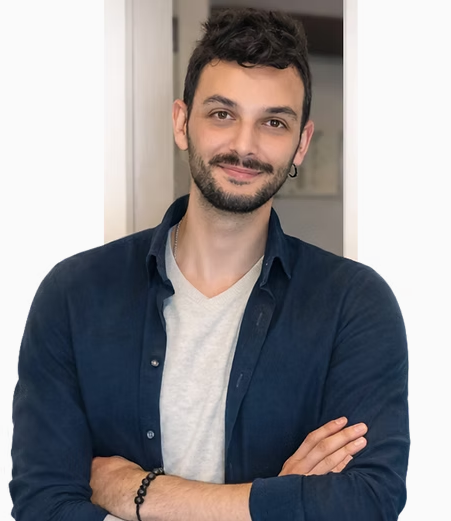
Kenan Yasin Bölükbaşı is a well-known and highly respected professional astrologer in Turkey. He is also a teacher and researcher, born and raised in Istanbul. He studied molecular biology and genetics and describes himself as a former geneticist. He has been a full-time professional astrologer since 2013 and has specialized in several areas, among them medical astrology. His approach is grounded in both classical tradition and modern innovation.
He specializes in Locational, Medical, AstroCartoGraphy and Mundane Astrology, with extended expertise in Horary and Electional techniques. Kenan holds the ISAR Cap certification and is a member of APAI, OPA, and AA. As the European representative of the Cosmic Intelligence Agency.
He is the founder of the Experimental Astrology Academy an APAI-accredited school that trains astrologers through long-term, research-based programs and a faculty member at Kepler College. Through his academy he trains students, builds research teams and collects astrological statistics. On his YouTube channel, mostly in Turkish with some videos in English, he shares his research with an international community.
He is also the author of four published books and regularly shares articles, research, and educational content that inspire astrologers in Turkiye and around the world.
Kenan is currently studying for a master’s degree in educational management. His goal is to become an academic in the field and to help build a stronger educational system for astrology, both in Turkey and internationally.
I turn astrology into story and astrologers into humans…
🟣 Are you being real or just sharing knowledge?
🟣 ARE YOU CONVEYING THE RIGHT MESSAGE?
🟣 Is your message truly felt?
What I learned from Kenan’s journey…
Do Eastern and Western Astrology Clash?
So often we’re asked to choose a side. East or West. Science or spirit. Where we come from or where we’re going. And sometimes choosing feels like losing a part of ourselves.
When I asked Kenan whether astrology is Eastern or Western, he smiled and refused to pick. Not to avoid the question, but because for him the most honest answer is a bridge. He grew up on land shaped by the Greeks, the Persians, the Phoenicians and so many others, and instead of separating those layers, he studies how they speak to each other.
That touched me deeply. I think many of us carry two worlds inside: the culture we were raised in and the one we chose, the family story and our own. Kenan reminded me that we don’t have to cut one of them off to belong. We can be the bridge.
He also gave me hope about what gets lost. Libraries disappear, traditions fade, knowledge is forgotten or transformed. And yet some knowledge waits for its own time to appear, the way Uranus was always in the sky until we were ready to see it. Maybe the same is true for the parts of ourselves we haven’t discovered yet.
And when I asked whether he feels the weight of everything he was born into, he laughed and said no. He follows it because he finds meaning there, not because anyone told him to. So here is the question I’m still sitting with: what are you following, even though nobody told you to? Maybe that is your reason to be here.
Mayra Medina is the host of Backstage Astrology and a Creative Consultant for Astrologers, working across communication, branding, content, digital storytelling, and archetypal astrology. Through her podcast, Mayra aims to elevate astrology by sharing the human stories behind the people shaping it today.
In short: Kenan Yasin, a former geneticist and astrologer raised in Turkey, doesn’t split astrology into East and West. He studies it through comparative history across cultures, and describes Turkey as a bridge between the two because so many civilizations shaped its tradition.
For Kenan, the question is not which side to pick. “Turkey really is a bridge between East and West, and we can say that quite literally,” he says. Its lands hosted the Hellenistic world to the west, Persian traditions to the east and the Phoenician world to the south, so he prefers comparative history to separating “Turkish” from “Western” astrology. This conversation is not a comparison of Vedic, Chinese and Western systems: it is about the civilizations and history behind the tradition.
“My Mercury is in Libra, so I really wanted to build a bridge between East and West.” —Kenan Yasin
In Part 2, Mayra Medina and Kenan also talk about what astrology gave a former geneticist, what gets lost when knowledge disappears and why some of it waits for its own time, what Turkish cosmology looks like, and what he means when he says the universe speaks in symbols. When Mayra asks whether he feels the weight of the tradition he was born into, his answer is quietly certain: “I think there is a reason why I’m here.” Part 2 is for Backstage members first; Part 1 is open to everyone.
Kenan prefers comparative history to any neat division between Turkish and Western astrology. With his Mercury in Libra, he says, he wants to build a bridge between East and West. He believes the problems of the 21st century differ from those of the recent past, and that our century may resemble much earlier periods, such as the 12th and 13th centuries, so understanding it means looking across Asia, Turkish cosmology, China, India and many other cultures.
He reads the world as a symbolic language. A line on his old website says that the universe speaks to us, but its alphabet is symbols, not letters. Fairy tales, myths and the stories we hear as children all contain symbolism, and he believes we should follow those symbols carefully and consciously. As a former geneticist, he even plays with symbolic correspondences between the four DNA bases and astrological patterns, while being clear that this does not prove astrology: “When I look at nature I constantly see patterns, geometries and repeating symbolic structures.”
The same curiosity shapes his view of history. Knowledge has been destroyed, controlled, forgotten or transformed, yet he believes some knowledge waits for its own time to appear, just as the discovery of Uranus came at the moment humanity was ready to experience Uranian themes consciously.
Where Part 1 Left Off
In Part 1, Kenan told the story of how a geneticist left the lab for astrology without ever stopping loving science. Part 2 opens on the question Mayra asked at the end: what has astrology given him? His answer is a scientific approach. To read the sky, he says, you also need to understand life on this planet, so astrology opened a new door into biology, chemistry and physics.
A Land Built on Layers
Kenan grew up in a geography built on top of many historical layers. Look west and you meet the Hellenistic world and Alexander the Great; look east and you meet Persian astrological traditions; look south and you reach the Phoenician world and figures such as Marinus of Tyre. That is why, he says, the astrological inheritance of the region has to be understood far more broadly than through one empire, and why he calls Turkey a bridge between East and West.
Following Meaning, Not Expectation
Asked whether he feels the weight of the tradition he was born into, his answer is no. He feels connected to the land, he loves comparative history, and he senses that there is something there for him to understand. “I think there is a reason why I’m here,” he says. “I believe maybe I’m simply trying to follow that meaning.”
“Turkey really is a bridge between East and West, and we can say that quite literally.” —Kenan Yasin
“My Mercury is in Libra, so I really wanted to build a bridge between East and West.” —Kenan Yasin
“Knowledge sometimes waits for its own time to appear.” —Kenan Yasin
“It’s actually the same structure in another form… it’s not simply copying the past, but it’s also not completely separate from it.” —Kenan Yasin
“I think there is a reason why I’m here.” —Kenan Yasin
[00:00]
Okay. So, Kenan…what is what is a thing that astrology hasn’t given you yet?
[00:10]
In this video, Kenan Yasin explain why he left the lab to become an astrologer. In the second part, we get
[00:18]
into the thick of it, how he applies what he learned into the lab to his astrological practice, and why his
[00:25]
approach is unique. Kenan left the laboratory behind, but he took the questions with him. Maybe that’s the
[00:33]
lesson in his story. What we [music] love can be bigger than the job it came in. Then I asked him one more thing.
[00:40]
[music] What is something astrology hasn’t given you yet? His answer opens part two. And after that, the
[00:48]
conversation went somewhere deeper than I expected.
[00:52]
We talked about what gets lost. a library, a court of astrologers, centuries of knowledge, and whether any of it can ever [music] come back.
[01:03]
I asked him what Turkish astrologers understand that western astrologers have forgotten. I wasn’t expecting his
[01:11]
[music] answer. He didn’t want to split astrology too neatly into east and west.
[01:15]
[music]
[01:16]
He wanted to start with history and I understood why. Kenan lives in Turkey. I live in Jerusalem. two places layered
[01:25]
with history where astrology has been part of life for thousands of years. I wanted to know what happened to all of
[01:33]
it. Kenan showed me that to understand astrology today and where it’s heading, we have to look back first. Along the
[01:42]
way, he took me inside his mind. A cosmo vision where even the pole of a tent carries meaning and every sea has a
[01:51]
color and a direction. a scientific approach applied to mundane astrology, medical astrology, and astrocarttography.
[02:00]
I try to keep up and somewhere in the middle of it all, I asked him something personal. Do you ever feel the weight of
[02:08]
carrying a hairy touch this big? His answer is still with me. So, [music] let’s begin.
[02:19]
Okay. So, Kenna, what is what is a thing that astrology hasn’t given you yet or maybe something that it has given you?
[02:29]
my uh ability to understand scientific approach. Maybe maybe I would say this
[02:36]
scientific approach is a great way to understand astrology because before you
[02:44]
know or interpretations or astrology. uh you need to focus on verology not
[02:51]
astrology [laughter] maybe because we live uh in this uh planet you know on
[02:58]
the planet planet earth. So we need to think about these environments. So
[03:04]
biology or chemistry or you know physic uh so astrology opens a new door to
[03:13]
understand the scientific areas in a deeper way and also um
[03:21]
I maybe I give astron [laughter] maybe how can I you know describe these
[03:30]
things but I I I put a lot of effort thoughts uh on on you know developing
[03:38]
scientific approach in the field of astrology. So maybe I would say this this approach right
[03:46]
Kenan I want you to tell us more about Turkey because astrology and astronomy were
[03:54]
once one discipline there and then the chief astrologers used to serve the Ottoman court for centuries before that
[04:02]
office was gone. So tell us what was lost there and is any of that recoverable? Thank you for asking uh
[04:11]
these uh themes because if we start with Turkey, I think Turkey really is a
[04:19]
bridge between east and west and and we can say that quite literally and yes
[04:26]
there was a time when astronomy and astrology were seen as one discipline
[04:32]
here although historically that was true uh in many cultures.
[04:39]
But when you think about my when you think about the geography of Turkey and these lands have hosted so many so many
[04:48]
different civilizations there are so many places and so many layers of history here and and it it’s
[04:56]
almost a geography built on top of many different historical layers and if you
[05:03]
look to the west you immediately meet the Helenist ic world, Greek culture and
[05:10]
the and Alexander the Great. And if you look to the east, you encounter the
[05:16]
Amaniad Empire or the Persian uh Pers Persian and Persian astrology traditions.
[05:25]
And if you look further south,
[05:28]
[laughter]
[05:29]
you reach places such as uh tire or and Lebanon areas connected uh with you know
[05:39]
ficanian culture fenican fenic culture. I’m so sorry about my pronunciation. Fenicanin
[05:48]
culture and with very very important figures in the history of astronomy and
[05:54]
geography such as Marinus of T we we say t I I don’t know how to say
[06:02]
in English ty or t I don’t know in yeah ty I think it’s t i t y r e right
[06:08]
yeah t y r e tyra marinus of tyra for example so there are many civilizations running this geography
[06:17]
Because of that, I think we need to look much further back than an only the Ottoman Empire. When we talk about the
[06:26]
astrological heritage of this region, we need to think about the the the the inheritance in in a much broader way.
[06:35]
And yes, of course, some of that heritage has been lost. I know that. But but but that that happened everywhere.
[06:45]
And think about the library of Alexandria and how much knowledge disappeared through history. Knowledge
[06:52]
is power right Myra do you agree with me? I don’t know but but knowledge is power and throughout history knowledge
[07:00]
has also been destroyed controlled forgotten or transport transformed. So when I when we look at this through a
[07:10]
postc colonial perspective, we also encounter uh orientalists, oxidentalists approaches, right? Uh
[07:19]
these different ways of looking to looking at east and west can create a kind of epistemic crisis. uh because
[07:28]
sometimes people have difficulty understanding which knowledge belongs where how it developed and how it should
[07:35]
be interpreted today and we can cover we can cover what I what was lost and I think many things are possible uh but I
[07:44]
also think knowledge sometimes waits for its own time to appear it’s it’s also
[07:52]
striking I think because we can we can see this symbolically in astrology, right? Look at the discovery chart of
[08:00]
Uranus for example. Uh Uranus was always there, of course, but the moment we
[08:06]
discovered it tells us something about the historical moment when humanity was ready to experience uranian themes consciously.
[08:17]
And I think I think we can say something similar about Chiron or other discoveries. Something may already exist
[08:24]
but its discovery, its appearance or uh our ability to understand it may have
[08:31]
its own timing. So when we talk about Turkey, yes, but uh but it’s when we
[08:38]
talk about geography, we need to focus on a lot of layers. So we need to think about these layers. we need to think
[08:47]
about then we need to think about um different cultures heritage. So
[08:54]
regarding that regarding what I’m trying to build in astrology uh today or you
[09:01]
you mentioned instambul today so I wouldn’t really uh say that it’s
[09:09]
something completely new and disconnected from the past. I think it’s actually the same structure in another form and I’m trying to you know
[09:18]
reconstruct that relationship with astrology for the present days. So it’s not simply copying the past uh but but
[09:28]
it’s also not completely separate from it and I hope that makes the idea a little clearer. It’s so interesting
[09:36]
because you Yeah, you’re like you’re someone who sees both worlds, you know, you’re you’re I mean you’re teaching at Kepler College. You have all these western kind
[09:44]
of like friends from the astrology community. But I have a question for you.
[09:49]
What does Turkish astrology understand that western astrology has forgotten?
[09:58]
Turkish and western astrology when we compare with them. Actually, I think it may be more useful not to separate
[10:06]
everything too strongly into Turkish astrology or western astrology because my Mercury is in Libra. So, I really wanted to build [laughter]
[10:15]
build a you know bridge between east and west. But if we look at the Turkish history, okay, it’s it’s great question.
[10:23]
Thank you. Thank you for all of these.
[10:25]
Maybe maybe I would say that Turkish history and make comparative historical studies. Of course, comparative
[10:34]
uh we can go much further back. But the geography of modern Turkey has been influenced by so many civilizations that
[10:43]
is impossible to describe it through only one tradition just Turkish tradition. The we are extremely close to
[10:51]
Mesopotamia. you know that the lands uh to the to the lands of the aeropates and
[10:58]
tigress you know these rivers and uh one of the major early centers of civilization. So this whole geography
[11:08]
contains very cosmopolitan and mixed culture, mixed layers of imag imagery, culture and knowledge. And that is why
[11:16]
rather than saying what does Turkish astrologer know that western astrologer forgot. I personally prefer comparative
[11:25]
history. Myra comparative history is a kind of a branch I really love. uh if we
[11:34]
really want to talk about Turkish traditions then we have to go much further back historically. For example,
[11:42]
in European political history, the piece of Westfallia, Westfallia uh becomes extremely important when we
[11:51]
talk about the the development of modern idea of the of the state and
[11:58]
sovereignity. You know what I mean? If we if we go back further the modern nation state system, we need to look at very different political structures.
[12:10]
Okay. Uh we can we can look at the Mongol Empire, Jenghaskhan
[12:16]
or Timurid Empire, the Saluks or GTurks or many other societies across Asia.
[12:25]
Turkish astrology and cosmology. When we think about and long before our modern understanding of states and borders,
[12:33]
there were already very important political structures before Westfallia, the treaty of West they they already
[12:42]
have a lot of orders, right? uh my thing I think today you know we need to these
[12:50]
you know focus on these hierarchies and relationships uh because they were already very important
[12:57]
political structures communications relationships and and I think observing all of these completely is extremely
[13:06]
important that is why I always work with comparative history in my own research and actually Myra I Today we almost have
[13:15]
to do this not separate from eastern or western. Uh do you know why? Because the
[13:22]
problems of the 21st century are not really the same as the problems of 20th century uh or even many of the centuries
[13:32]
immediately before it. Why? Because today we are living through a climate crisis. Economically the world is going
[13:40]
through a very difficult period. We are also living in a time when when there is increasing distrusts.
[13:51]
Did you remember that trust is is also so [laughter] important? Yeah.
[13:55]
It’s increasing this distrust toward the nation state model, right? Nation state model.
[14:01]
People can ask if I become ill, will the state really be able to look after me?
[14:09]
Right? 21st century when we’re questioning this. If there is an earthquake or another disaster, will the states reach me immediately?
[14:18]
Wow.
[14:18]
At the same time, corporations, CEOs and other non-state structures have gained enormous influence
[14:26]
in this century. So, the problems of this century are different. And this is why when we study comparative history,
[14:35]
comparative uh astrology, I don’t think we can look only at modern Europe uh or
[14:43]
western astrology. They we we may also need to go much further back because uh
[14:50]
in some ways our century may uh resemble resemble right resemble much earlier
[14:57]
periods more than the the the recent recent past. Sometimes I need I think we
[15:04]
need to look at the uh the you know 12th centuries and 13 centuries
[15:12]
13s uh periods of climatic change, political fragmentation and and very different forms of social
[15:21]
organization. And when we do that, I think we also need to look at Asia, Turkish societies, Turkish cosmology,
[15:30]
Turkish astrology, China, the Mongols, India and many other cultures. I’m I’m very interested in these subjects. Myra
[15:38]
and honestly uh they excites me enormously. I also teach these ideas to my students in my mundane astrology
[15:47]
specialization courses. So we need to talk about you know chronocators
[15:53]
uh such as Jupiter and Saturn and their connections you know their cycles and their cycles
[16:03]
tells us a lot of things regarding these comparative history. So you just ask
[16:10]
Turkish astrology but I [laughter] I explain a lot of details and all that but I sometimes discuss them in
[16:19]
different webinars but we need to think about these um you know these approach not just focus on just one uh state
[16:28]
because it’s it’s not just Turkish as a state as a country it’s it’s about culture It’s
[16:38]
about history. Yeah, maybe I would say this. Thank you. [laughter] No. Yeah, it’s amazing because I mean um
[16:46]
I’m I’m coming from a international relations background and I remember one of my teachers in a class when I was in university, we were studying
[16:54]
geopolitics. There was this subject and he said that the center of the world is Turkey. Yeah.
[17:00]
And that stuck with me because as you as you mentioned, it’s the bridge between east and west somehow. But because of
[17:07]
that it it has built its own cosmo vision like cosmo vision of the world of the worldology we say.
[17:16]
Yeah. Something like that. and and so having you from Turkey, you know, I wanted someone to explain me a little bit about what what all of this
[17:23]
encompasses. Basically, Turkish cosmology is not a different uh part uh of when we think about the the
[17:32]
entire astrology community. But but just think about Chinese astrology or
[17:39]
Korean astrology or you know uh Mayan astrology. There are a lot of different
[17:45]
branches we we use in in our astrology area. But when we think about Turkish astrology, I think Turkish astrology is
[17:54]
not a branch. Maybe we think about Turkish cosmology and cosmo vision. you mentioned that and uh and it you know it
[18:03]
depends on geography as well because uh Turkey Turic people maybe we would say
[18:10]
Turk people you know u wants to you know walk around in other countries and also
[18:20]
they use some tents. So Turk cosmology you know
[18:27]
depends on the usage of tents. You know what I mean? For example, you come across a lot of important and meaning
[18:36]
data uh when you are analyzing the tent of this culture because the tense pole
[18:44]
the center pole is regarding as a symbol of uh the the the the
[18:51]
vertical axis you know what I mean and horizontal axis and vertical axis maybe we would say and the the the center pole
[18:59]
is also meaningful because the center’s pose right side uh links to the male
[19:06]
area the left side links to the female area you know what I mean feminine and
[19:13]
masculine symbolism they also use and they also developed uh
[19:20]
you know directions regarding directions using uh symbology
[19:27]
and you know colors and seas just just Think about the sea’s names, you know,
[19:34]
black sea, white sea, blue sea, and the red sea. The red sea. Yeah.
[19:40]
Black is, you know, uh, black represents the the north and red represents the
[19:48]
south and and and the white represents the Mediterranean Sea, white represents the the west and blue represents the
[19:58]
east. So they use their own culture to to identify or to explain all of these
[20:06]
cultures and also they use a lot of different you know animals animals and animal symbolism
[20:14]
and in a nutshell maybe we we would say Turkey is a bridge between east and
[20:22]
west. So in in modern Turkey we also uh you know come across western astrology,
[20:30]
Henistic astrology and also uh Vic astrology, geotish astrology.
[20:35]
So so it’s it’s a culture. It’s it’s mixed maybe I would say these stories. Uh does it make sense?
[20:44]
Yeah. Yeah. No, it makes sense. is like a a melting pot of different philosophies and ideologies in a way because so many people have been there.
[20:52]
I mean so many empires and and tribes. So it’s it’s quite kind of similar here.
[20:57]
There there is the the Kuman scrolls here in the Dead Sea which happened to be Elenistic in a way where they put these
[21:06]
scrolls in the caves to hide them so they could flee because they were being um prosecuted or something like that. I
[21:13]
can’t remember the story. So it’s like a melting pot all this area I think of different uh philosophies but you as
[21:20]
coming from Turkey with such a big astrological heritage do you ever ever feel the weight of carrying that
[21:29]
responsibility? [laughter] Wow. U more accurate to say no. [laughter]
[21:38]
I don’t I don’t really feel that other people uh are placing this responsibility on me. Uh why? Because I
[21:46]
generally don’t speak publicly about subjects that I [clears throat] don’t genuinely want to work with.
[21:52]
So for example, I don’t usually practice mundane astrology in a heavy heavily political way. you know, just thinking
[22:01]
about Israel and Turkey, just think about it. I may I may research political subjects, but I don’t necessarily present all of that research publicly.
[22:12]
In the same way, I don’t usually enter deeply dogmatic or theologic theological or religious discussions. Yes, Turkey is
[22:22]
a m you know Islamic country but but I always you know you know religious
[22:29]
discussions you know I don’t usually enter deeply these dogmatic uh religion
[22:35]
religions because those are not really my areas but I genuinely love comparative history so I never think I
[22:44]
was born here therefore people expect me to represent this heritage I don’t feel that kind of pressure.
[22:53]
Uh actually it’s it’s almost the opposite by Ra. Why? Because I totally enjoy it because I feel very connected
[23:02]
with the lands because my IC sign is Scorpio and Turkey is a Scorpio country.
[23:09]
So I was in being born here, growing up here and living within all of these historical layers. I’m not carrying this
[23:18]
heritage because somebody told me that I have to [laughter] uh I’m following it because I feel that
[23:26]
there is something meaningful there [clears throat] for me to to understand. I think I think there is a
[23:32]
reason why I’m here. Uh [snorts] yeah, I believe maybe I’m I’m simply trying to follow that meaning.
[23:40]
Amazing. And you know what? If you ever teach comparative history um in English, please let us know or at least let me know because I will be so interested.
[23:49]
[laughter]
[23:50]
No, thank you. Thank you. Three or four months ago, uh Ashin’s school, I
[23:56]
presented a a great uh you know, presentation. Ashin, you know, um he’s a
[24:04]
great astrologer and uh you know, lives in India. its own geography,
[24:12]
four signs, four sectors and Tommy gives
[24:19]
four sectors um as a reference of elements. For example, the the Europe
[24:27]
side includes um you know air not air uh fire elements. Oh,
[24:35]
fire elements and also the Russia the other side up and east the other side
[24:43]
represents air signs and the lower side u and the right side
[24:50]
represents um earth and the left side represents water
[24:56]
and and we need to think about Jupiter and Saturn cycles not just many years
[25:06]
completing its own. Uh we also think about the earth earth cycles because you
[25:13]
know not earth uh maybe we can say that you know uh element elemental cycles we need to think about elemental cycles of
[25:21]
Jupiter and Saturn because these elemental cycles takes
[25:28]
140 or 2460 approximately 240 or 260 years.
[25:35]
Yeah. And and now you know the last conjunction is was in
[25:41]
Aquarius right in 2020. In 2020 Jupiter and Saturn conjunct
[25:50]
in Aquarius and Aquarius you know it’s an air sign.
[25:55]
So we shift we shift to the air region now. And in the 21st century we need to
[26:02]
think about Russia the earth se the air sector Russia upper India, China.
[26:12]
Just thinking about this because other sides we need to talk about United States [laughter] and also you know uh
[26:20]
the the uh capitalist system but the other side represents communism, communist systems. So uh there is a
[26:30]
threshold threshold between the two and it begins you know it it has began u in two 2020.
[26:43]
Yeah we’re there. Let’s see how it goes.
[26:46]
So [clears throat] I all the time I I I I discuss I discuss these things.
[26:53]
Yeah. Of course, we’re going to always like we always leave in the description below, even in the in the comments um the the website, not the website, the
[27:00]
web page of this episode, and you guys you can find all the resources, you can find where what Kenan is going to be doing, his bio and all of these things.
[27:08]
But before we go, Kenan, I want to ask you something a little bit more on the personal side without being too intrusive. Which transit are you waiting
[27:17]
for with excitement right now? And which one has you thinking, “Oh my god, I’m not sure how I’m going to handle this.”
[27:25]
Uh, [laughter] well, transing, waiting for it’s a it’s a it’s a simple and quick question.
[27:33]
[laughter]
[27:34]
I prefer to say this, you know, actually I don’t really have a transit that makes
[27:42]
me think, oh my god, how am I doing
[27:45]
[laughter]
[27:46]
going to to manage this? I live I live my life quite spontaneously. I don’t I
[27:54]
don’t think I don’t really have very strict rules and I’m not someone who says every morning I must wake up this
[28:03]
at at exactly this morning this time I must eat only this. Yes, I’m a burger man but the the the
[28:10]
latest degree maybe I I would say. So, so but I but I do have an interesting astrological experimenting coming up.
[28:19]
Myra, maybe I would mention that my birth day is on the 22nd of September.
[28:28]
Oh, and you know, as I said, I’m an EUX Eunox child. And this year, I will spend
[28:36]
my birthday uh in the United Kingdom rather than in a stumble where I was born. So my
[28:43]
birthday is on that time. Uh so I I spend my solar return in stumble. If I
[28:50]
spend on uh solar return in stumble, the asano would be Leo. But in the United Kingdom, it becomes cancer. So I am very
[28:59]
curious to compare the two charts and observe myself throughout the year. Uh and of course I will only be there for a few days. Myra.
[29:12]
Yeah.
[29:12]
But I want to observe whether the relocated solar return really seems to make a difference.
[29:17]
But also can there is something I found on on your website like on your old websites and you said something like I mean it’s in
[29:26]
it’s in Turkish. I have to translate that but it says the universe speaks to us but its alphabet is symbols not
[29:35]
letters. Can you tell us what what do you mean by that and and why why you wrote it?
[29:42]
I prefer to choose or choose or Yeah. Yeah. Yeah. Great question. Thank you.
[29:47]
Thank you. I write on my my um past website, not the recent one, but
[29:54]
[laughter]
[29:54]
Yeah. Yeah. But you digged it and you found it.
[29:59]
you’re really great great [laughter] investigator or how how would I say I don’t know but but we see you know we
[30:09]
see this everywhere but but think about religious stories right for example we
[30:16]
read that Moses struck the sea with his stuff and and the sea divided into two
[30:24]
but there is also a symbolic language inside that story that that stuff means
[30:30]
something. The sea means something. The fact that it divides into two means
[30:38]
something. If you think astrologically prophets can be associated with uh Jupiter
[30:45]
and many prophetic stories include a cave or some kind of protected space,
[30:52]
right? And Jupiter is exalted in cancer and cancer can symbolically relate to
[30:58]
caves, shelters and enclosed spaces. And Sagittarius on the other hand, Sagittarius another sign connected with
[31:07]
Jupiter is also strongly connected with stuffs allow you know arrows or you know direction.
[31:18]
So, so, so you can begin to read these stories on many different symbolic levels and it it’s not only religion, fairy
[31:26]
tales, myths, [laughter] stories and the things we hear as children all of them contains symbolism.
[31:35]
So, I think we we need to follow these symbol symbols more carefully and
[31:42]
consciously. Uh that is really what I mean uh when I say you know the alphabet of the universe is made of symbols. Yes.
[31:54]
Because it’s not directly about genetic letters uh you know genetic letters when we
[32:01]
think but interestingly I also find symbolic patterns when I look at genetics because we have four basic DNA
[32:08]
bases right adenine guanine cytosin and timin. And in my own symbolic way of thinking, I sometimes play with
[32:16]
correspondences between these four bases and astrological patterns. I also divided the bases into you know purins and pyramidins.
[32:27]
uh and they are also associated with um you know feminine and masculine signs
[32:35]
and adenin just thinking about aden Aries guan in gemini cittosin cancer and timin taurus just four basic
[32:45]
signs and four basic DNI DNA bases so two groups two different structures
[32:52]
symbolically that that immediately makes the makes me think about division such as masculine and feminine or fire or air
[33:02]
compared with uh you know earth and water because I also look at the process such as respiration and and
[33:10]
photosynthesis in a in a similar symbolic way right in a scientific approach matter is constantly being
[33:18]
transformed from one state into another and even in DNA itself we structures
[33:26]
such as the uh dioxbo dioxurbo how can I pronunciate I don’t know but dioxurbo
[33:34]
sugar it’s a a five membered ring and when I see a fivefold structure
[33:42]
symbolically my mind immediately goes to the pentagram and to the fivefold cycle we associate with Venus itself [snorts]
[33:50]
so just thinking about photosynthesis and you know air and um fire equals to
[33:59]
or produces earth and water and vice versa. Just think about this. [laughter]
[34:07]
So I’m not saying that biologically or biology scientifically pro proves astrology [laughter]
[34:15]
and that is not what I mean but I’m I’m saying that when I look at nature I constantly see patterns geometries and
[34:23]
represent repeating symbolic structures and for me that is one of the one of the ways the the universe speaks to us. I
[34:33]
enjoy I enjoy trying to discover that language. Uh because it’s a symbolic language. Thank you. Thank you for asking.
[34:39]
No. Amazing. And also I’m I’m betting or I’m assuming you must be really good at medical astrology. No, because you have this background. No, [laughter] I don’t know.
[34:49]
It would be so interesting. You also teach medical astrology or only like like certain branches of astrology?
[34:56]
Sure. Um I have a lot of uh branches but but the the the three uh the three
[35:03]
branches mainly I you know interested in maybe I would say uh the first one is
[35:10]
mundane astrology. The second one is medical astrology and the third one is astro mapping of course. So astro
[35:18]
mapping is also meaningful when we think about uh you know geography or
[35:24]
[laughter]
[35:25]
topography or cosmology. But medical astrology is also meaningful for me because I really want to build a a
[35:33]
different discipline into this because I called I coined the term coin the term we call astroctology.
[35:43]
You know what I’m equals to a cell and we use organels in a cell. Just think about organology.
[35:53]
Yeah. Astrotologology because everything you know as above so belove that Hermes
[36:01]
tells us but at that time there was no any electron microscopes right. So now
[36:08]
we have electron microscopes and we we know organals in a cell. So I I really
[36:16]
want to develop my research regard using these organals because I I I compare
[36:22]
organals and seven traditional uh planets planets and organals this symbolism. Oh my god. And also
[36:31]
Yes. Yes. Yes. We have a group um uh an and medical group uh and statistics
[36:38]
group. We also investigate a lot of articles uh from pubmet pubmet.com and
[36:45]
al also research gates and this group’s manager is now uh my my colleague from
[36:53]
my ex university my old university. So she’s a geneticist and she’s also a a a
[37:01]
doant uh you know what I mean? I’m a former geneticist but she’s also a teacher a professor you know [laughter]
[37:09]
so it’s it’s really meaningful uh so yeah that’s that’s all in a nutshell I would say [laughter]
[37:19]
but coming years coming years maybe I will I will mention I will mention all of these process. Yeah.
[37:26]
Yeah. Amazing. I mean, thank you so much, Kennan, for sharing with us, you know, part of your journey of your way
[37:33]
of thinking and approaching astrology, a little bit about Turkey, Turkish history and astrology as well. And finally, is
[37:40]
there any story or topic you’ve never had the chance to talk about publicly that you would like to share with us right now?
[37:51]
Oh, thank you. Nothing comes to my mind.
[37:54]
But of course, maybe you know if people are really curious, I’m single. I’m not married [laughter]
[38:04]
in astrological [laughter] relationships period ages. So [laughter]
[38:13]
there’s a chance. Yeah. No, no, no. I think actually the conversation might be polished around Libra season. So that’s perfect.
[38:21]
Thanks for showing that. [laughter] There’s librism. Oh, great. There is no coincidence in our universe. I know [laughter] that.
[38:30]
[gasps]
[38:31]
But honestly, honestly, I I don’t think there there is a big subject that I have never had the chance to talk about it. I
[38:39]
already tend to speak about the things I want to explore uh and the things I want
[38:45]
to create. So, so, so thank you. Thank you very much for giving me uh the time
[38:52]
and space to talk about all of these subjects today. geneticists,
[38:59]
DNA base bases and also geography, cosmology, culture and so many things [laughter]
[39:08]
relationships medical I don’t it’s maybe yeah I think it’s it’s useful for for this I don’t know
[39:17]
but but I know I’m I’m someone who likes to explain things in a quite a lot of
[39:24]
detail but but it’s it’s it’s useful for the program. Of course, we can use all of this. So, and Myra, thank you. Thank
[39:32]
you for Oh, no. It’s my pleasure. It’s such an honor to have you here. I follow your work. I know you’re at Kepler and and you know, just the way you share
[39:41]
information with us is so precise and fun at the same time. So, I thought you you had such a personality and and now I
[39:50]
discovered you have such a history, a journey. So, thank you, Kenan, for everything you share with us. Um, I’m going to leave your information below in
[39:58]
case somebody wants to join one of your online classes or courses. Do you do readings? I actually didn’t ask you.
[40:06]
I don’t have enough time to, you know, consultations, giving some consultations, but but I I teach I teach
[40:15]
and I graduate a lot of important astrologers in my country and in other
[40:22]
countries. So they also reach uh their names. But actually maybe I would say uh
[40:29]
I would mention that our uh stumble astrology conferences it’s a it’s a
[40:36]
great organization. Uh we we we started this journey we has started we have
[40:44]
started this journey three years ago and this year we we will we will organize an
[40:53]
event. Myra maybe I would I I really want to explain this organization if you Yeah. If you don’t mind.
[41:02]
Yeah.
[41:02]
Yeah. Because actually we we also have you know very special events coming up
[41:08]
and this event from the uh from the 15th and to 18th of October. Uhhuh.
[41:16]
Yes. 15th of uh 15th uh to 18th of October. Yes. Uh we are going to uh the
[41:25]
gobeeklete region. Uh goc means belly tee means hill maybe belly hill we would
[41:34]
say go region for stumble astrology conferences. Goblit Gobecape is an extraordinary archaeological site
[41:43]
uh and and and it’s it’s often described uh as a kind of zero point of history.
[41:51]
Oh, because of how much it changed our understanding of very early human civilization.
[42:00]
We have [music] we have invited some wonderful astrologers to join us including Liz Heatwe [music]
[42:09]
and Tanya Daniels together with members of our own team.
[42:14]
We will have both Turkish and international participants and the program will take will will work
[42:21]
bilingually. Uh so with Turkish and English interpretation and we are going to combine astrology, history,
[42:31]
archaeology and and sky observation even sky road is bringing his telescope Myra.
[42:37]
[laughter]
[42:37]
So so we will also have a sky observation session there.
[42:42]
Wow. And Liz will speak about the age of Leo and Tia will speak about tell talk about Har and you know Sabian Sabian symbols.
[42:52]
Oh my god I love this story and the lunar tradition [laughter] of the moon. So so and we will also
[42:59]
explore the historical background and the region together. So I think it’s going to be a very special experience
[43:06]
because we are not simply uh sitting in in in a conference room outside
[43:14]
we are we are actually actually going to be there in the landscape itself.
[43:20]
So yeah maybe maybe these experiences as far as I know now we don’t really have places left at the moment. I know I remember that.
[43:30]
Oh no. But if anyone would like to see the program and learn about more about it, they can visit
[43:38]
kennyasin.comconference just a simple and basic and look at the conference information
[43:45]
here and and we will also organize different events in the coming years.
[43:51]
Yeah. So please please keep following us and the Astrology Conferences has also also has a Facebook page where you can
[43:59]
follow the events and see our previous work and and our backstage of our
[44:06]
organization [laughter] and find information about that. Yeah, thank you. Thank you Myra.
[44:12]
Wow, that’s amazing. Thank you. So yeah, visit Cananan’s website. I will leave the details below. He also has upcoming classes, courses, and he’s al also
[44:21]
teaching at Kepler College. If you want to check out, you know, what he’s teaching at Kepler, we’re also going to put that information below. So, Kenan,
[44:28]
again, thank you so much. It’s been such a pleasure and I hope to see you soon again [music] here in the backstage astrology. Thank you.
[44:39]
[music]
[44:53]
[music]
⛔ What happens behind astrology… doesn’t always make it to YouTube!
Subscribe to:
✨ Watch episodes before anyone else.
✨Access exclusive, unreleased content.
✨ Step into the real behind-the-scenes of each astrologer.
🎟️ Join the Backstagers and get a full pass to exclusive content 🎟️
*I don’t flood inboxes. I send a note about every two weeks — when there’s something real to say: new episodes, and the deeper reflections that don’t always make it to YouTube.